Wednesday, June 15, 2022

2022 Solstice Update

I haven't posted for a while due to a heavy work schedule, but I have continued to expand and refine my home garden over the past couple of years.

Last year I started a hydroponic garden in the basement and then added an outdoor hydroponic setup for tomatoes. The experiment was a huge success and I plan to expand the hydroponics both indoor and out this year.

I have observed that peppers like growing in containers (warm roots) and tomatoes like growing hydroponically. So while tomatoes and peppers grow in containers, most of my garden beds are dedicated to hardy varieties of greens (kale, chard, parsley, choi, spinach, cilantro, and herbs). There are also small sections dedicated to garlic, sunchokes, snap peas, strawberries and raspberries. The basement hydroponics are dedicated to growing lettuce where it can stay cool, well-watered and protected from insects.

I grew foxglove from seed last year and it was beautiful, I miss seeing it. I will have to be sure to start more seeds next spring. Otherwise, the front gardens are putting on a magnificent show. All four Easter lilies avoided being nibbled and will soon be unfolding. Delphinium will also be flowering soon for the second year.

The volunteer moonflower that I found in my front garden last year and moved to a container for TLC did wonderfully. I expected it to return this year, but a squirrel dug it out in early spring. Thankfully, it reseeded itself and there are now many moonflower plants developing in the pot. I am looking forward to sharing these as gifts for other gardening friends.

Saturday, May 30, 2020

Late Spring Update

Things are going well with the garden this year in terms of being on top of maintenance and harvesting but it is not without challenges.

Accomplishments:
 - Built a tool shed on the back of the garage so that I have easy access to all of my garden and landscape tools.
 - Built a frame to support the Dutch bucket system for growing fruits like tomatoes, peppers, cucumbers, squash and melons.
 - Added two new 30" x 8' raised frames
 - Put up a new fence around the asparagus bed
 - I am learning to use my new Jora tumbler composter. I have gotten the temperature up to 110 degrees F but am aiming for the most active range of 120+. I just mixed up a new batch today using some of what was already in there plus some shredded burdock leaves, sawdust and compost starter.
 - Instead of starting basil from seed, I purchased a plant from the grocery store and then propagated cuttings in water. I have about 18 seedlings doing well from the first cutting which also yielded some leaves for consumption.
 - Added important seedling start dates based on Johnny's spreadsheet.
 - Two more rows of raspberries were started from volunteer plants.

Things going well:
 - Peas germinated well and are about three feet tall
 - The grape hyacinth and tulips had a good show, the delphinium that I grew from seed last spring is looking very healthy. 
 - Potatoes in five gallon buckets.
 - Seedlings started in March and April are doing well apart from the beets that were planted out weeks ago and are still struggling to grow.
 - The square plant starting bed that I completed last year is working well to support succession planting.
 - Purchased one bunch of spring onions from grocery store in April and planted them. We have been enjoying them on a regular basis, chopping up the whole plant.
 - Purchased a horseradish root from the grocery store and it is growing well,
 - I have harvested a lot of lettuce, choi, celery, parsley, cilantro, kale, spring onion and asparagus so far this year, plus we have been growing trays of microgreens and regular jars of clover, alfalfa and mung sprout mix.
 - Grew seedlings under LED lights. They are so much better than fluorescents because they can be kept 24" above the seedlings, each lamp covers 30" square and the spectrum is better. Also, got a 62"x33" tray from Grainger to hold all seedling under the lights.

Challenges this year:
 - I let some compass weed go last year and am paying the price now by having to pick hundreds of  compass plant seedlings from my raised beds.

 - Bugs seems to be more of a problem this year, probably because of the mild winter.
   * I had to be vigilant about dropping asparagus beetles into rubbing alcohol several times a day until they were completely gone.
   * I am making an extra effort to protect my Easter lilies this year because they are so beautiful. Last year, the flowers were beheaded just as they came out (probably by squirrels). This year I put an enclosed fence with 2"x 3" rectangles around each one. Also, I did some research on the pretty bright red beetles that have been showing up on the lilies and found that they can be very harmful to the plants. So they got the same alcohol bath treatment. There only seem to have been six of those. I have been checking every day and no more have shown up.
   * I also happened across a couple of striped cucumber beetles.
   * Slugs have been kept under control with manual removal and beer traps. I have less holes in my greens as a result.
   * Cabbage aphids are starting up early on the kale. I have been removing leaves affected by them and disposing of them in the trash.
   * Then there are the yellow jackets that were getting in the house and generally being a nuisance.
   * Finally, the ants have had the run of the house for an extended period this spring.

 - A short spell of hot weather into the 90's over Memorial Day weekend caused the radishes and choi to bolt.

 - Ground elder is an issue in one of my front yard beds. I have just tried to be relentless about pulling new shoots in the hopes of starving the rhizomes.

 - Azaleas and Rhodos are not looking healthy and the Azalea that I purchase a couple years ago is not growing quickly. I will be feeding them Rhodo formula every two weeks.

Lessons learned:
 - Add some granular tomato food when transplanting from 2 inch blocks to quart containers. It appears that Bumper Crop can be deficient since some leaves were turning yellow with purple veins before being planted out.
 - Keep covering frames with Agribon until they are thick with plants, otherwise squirrel and cat will dig.
 - In the Northeast with a relatively short growing season it is best to fill all beds completely as early as possible in the spring. Plant things closer than recommended because you will want to move some things around as the vegetables that overwintered or with short harvest times are consumed. It is good to have extra plants that can be moved to fill open spots. Watch closely for plants that are beginning to go to seed and harvest them immediately. Start plants in the basement

Plans this year:
 - Get into a two week routine for feeding plants.
 - Become skilled at making compost with the Jora
 - Complete automatic watering system
 - Make a formal peppermint bed
 - Renew the asparagus bed and plant strawberries in-between.
 - Mix together some complete organice fertilizer (COF) re: Solomon's recipe
 - Garden walkways - Move hose bib to more easily accessible location and setup distribution point for watering. - Door and walls on greenhouse

Tuesday, April 16, 2019

First Tomato Sprout Appeared This Morning

The first tomato sprout appeared this morning, about five days after planting. I have the soil warmed to about 73 degrees F.

Thursday, April 11, 2019

Tomatoes, Peppers and Basil Started

Started some seeds tonight. There will be plenty to share:

Tomatoes - (10) Striped German, (10) Sun Gold Cherry, (5) Cherokee Purple, (10) Supersweet 100 Cherry, (5) Brandywine;

Peppers - (5) Biscayne, (5) Cali Wonder, (5) Summer Sizzler;

Basil - (15) Sweet.

Saturday, April 6, 2019

Planting Out

We had a beautiful spring day today, I believe the first warm sunny day that we have seen this year. It was a perfect day to pull the covers off of the garden and plant out some seedlings (started March 16 (chard, choi) and March 22 (snap peas)). Some of the arugula seeds that I planted directly in the garden March 24 had their cotyledons, but the lettuce and tatsoi have not appeared. Perhaps it has been too cold. Good thing that there were greens that survived the winter, this evening we had a nice egg scramble with mizuna, arugula and tatsoi. There is a lot of young garlic, onions, and kale; and mature mizuna, arugula, and tatsoi in the garden leftover from last fall.

I planted about 100 Super Sugar Snap peas, 14 Ming and Joi Choi, and 4 chard. I decided to keep some of the chard inside to mature longer, we will see if the seedlings that I planted today are strong enough to survive. I watered everything and replaced the heavy Agribon cloth with a light duty cloth before calling it a day.

Inside, I still have chard, celery, parsley, alyssum, and zinnia seedlings. It is time to start tomatoes, basil and pepper. Tomorrow I would like to directly sow carrots, beets and radishes as well as raspberry roots that I never got around to planting last fall. No sign of asparagus yet.

Seedlings started March 16 and 22

Full garden shot

Overwintered mizuna, parsley, carrots, plus
new snap peas and choi.

Overwintered, arugula, onions, garlic, and kale.

Overwintered lettuce, kale and parsley;
new snap peas and choi.

Lighter weight Agribon, primarily to keep the squirrels out.

Wednesday, September 26, 2018

Early Autumn Report

Our temperatures have begun to range between about 50 and 70 degrees F and we have had a couple good soaking rains over the past two weeks. I finally got the seedlings in the basement all planted outside last night (they could have been planted out two weeks ago). Most of the things that I planted have a 30-40 day maturation, but that will be lengthened because the days are short and the nights are cool.

I had to take out the marigolds that were growing very large, the zucchinis which were not producing much anyway and a few kale plants that overwintered last year but were still producing. I also took out the cucumbers and green beans which were shading the rear frame.

This morning, I replanted most of the radishes more deeply because it seemed that a good portion of the root was above ground.

I harvested apples last weekend. They taste very good, but I only harvested one armload. I decided it wasn't worth the effort to get to the higher branches because there were so few apples.

Harvest photos follow, from most recent to earlier in the month. The raspberry harvest of about 1 cup over two days was the largest of the season, though I have probably picked and eaten another two cups during the course of the season.


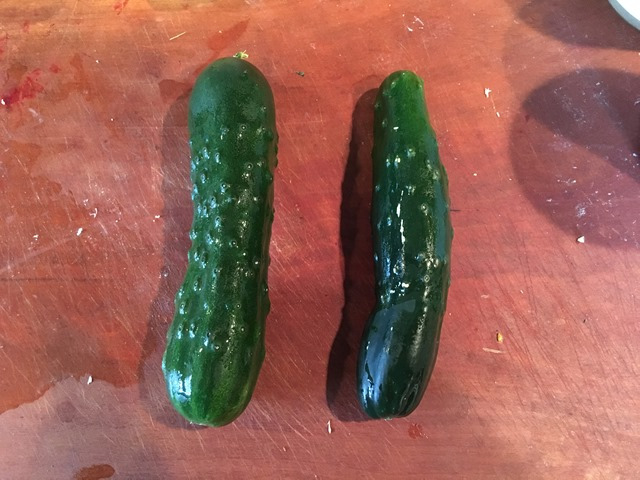
9/26 The last two cukes of the year

9/24 Harvest

9/24 Seedlings being set out
(lettuce, carrots, parsley, cilantro, tatsoi, choi)

9/24 Near frame after clearing (left a couple
of chard and pepper plants with fruit)

9/24 Snap peas being set out

9/21 Largest single raspberry harvest this year (1/2 cup)

9/21 Tomato harvest

9/24 Apple harvest
(not sure if the squirrels or tenants got the rest)

9/15 Harvest (basil and tomatoes)

9/16 Hot pepper with stress marks

9/15 Banana peppers and basil

9/14 Harvest

9/12 Harvest (beans, beans, beans...)

9/10 Small frame with celery, kale and peppers

9/10 New snap peas and radishes

9/10 Seedlings (snap peas, lettuce, parsley,
cilantro, arugula, mizuna, tatsoi, choi)

Monday, September 3, 2018

First of September Report

I was surprised to find several snap peas already maturing this weekend (started 7/13), so I decided to get some more planted (~80). I managed to get the last packet of snap peas that were available at the Coop. They were already taken down from display and someone had to search for them in the back. I also planted some radishes directly in the garden and am planning to start some carrots inside, though they will probably not fully mature before winter.

We have harvested an amazing number of green beans from just eight plants started in mid-June. The peak production appears to have happened this weekend though many of the pods should have been picked a little earlier.

The zucchinis are suffering from powdery mildew. According to a quick web search, the following natural remedies may work: rinsing the leaves in the morning when they will have a chance to dry quickly; vinegar solution 2-3 TBSP per gallon of water; milk, one part milk to two parts water, applied once a week.

I took out two tomato plants recently that were turning yellow/purple and blighted. I may not have fertilized as much as I should have since the tomatoes in the next frame are looking very healthy.


The largest harvest of green beans this year 
(planted mid-June)


Black Swallowtail Caterpillar on Parsley

Thursday, August 30, 2018

Harvest


Cucumber, green beans, yellow zucchini

Morning glory climbing the front stairs

Monday, August 27, 2018

Harvest and seeds started

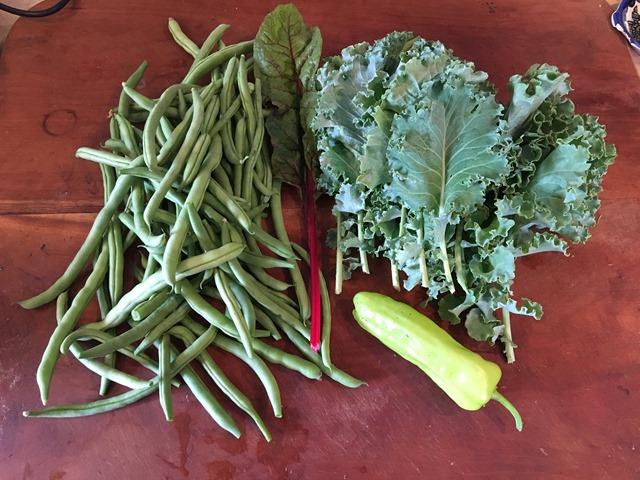
Green beans, chard, kale, and pepper

Seeds started: lettuce (6 varieties), parsley, arugula,
cilantro, kale, mizuna


Wednesday, August 22, 2018

Harvest and other things


Basil, green beans, zucchini and tomatoes

Perennial garden work in progress

Powdery mildew on zucchini leaves
Daylilies that refuse to stop blooming

Sunday, August 19, 2018

Mid-August Report

Alas, I have not yet planted anything for the fall/winter except for about 200 snap peas and the kale and celery from this spring that appear that they will not mature until the fall. I must get some carrots, lettuce and other hardy greens planted soon or I will miss another opportunity to see how much gardening I can really do in the darkest depths of winter in Buffalo, NY.

We were away for more than a week, but my daughter made sure everything was watered. I was amazed at how much things grew. Apart from a lack of fresh lettuce, the garden is supplying plenty of fresh produce for the kitchen and we are ready for another cutting of basil to make pesto.


Cherokee purple (?) tomatoes

There are only four green bean plants
per frame but they are dominating

Green beans, cucumber, kale, etc.

Sweet peppers in the foreground

Squirrel deterrent cages

Sun Golds, Yellow Pear Tomatoes, Blue Lake Beans

Tuesday, August 14, 2018

Gadzukes and Cukes!


Tuesday, July 31, 2018

End of July Report

I have been staying ahead of the tomato blight by pulling leaves as they turn yellow, but I also purchased some copper spray from Home Depot to see if that will help to slow it down. It looks like we will have a great tomato harvest this year if I can put up the fencing before the squirrels start to work on them.

I have been picking a handful of raspberries every day. We have picked three zucchinis now and three cucumbers.

Yesterday, I moved the containers to be near the garden to get more sunshine and to ease the setup of the automatic watering system.


Saturday, July 28, 2018

Saturday Harvest

It took half of the day to process all of these veggies. There is another large bowl not pictured.


Friday, July 27, 2018

Morning Glories Almost Blooming and our First Zucchini of the Year


The zucchini got away from me after a single day of not paying attention


Tuesday, July 24, 2018

Cutting Branches/Early Blight

This morning I finally got around to cutting branches that were shading the garden. However, I noted that the green beans in partial shade were growing more vigorously than those in full sun. Salad greens also do well in partial shade. I may have to suspend burlap shade cloth in the future in choice locations to make up for the lack of branches.

The new snap pea starts will be planted in the next day or two. The zucchini are almost picking size. There are lots of small cucumbers developing, lots of cherry and regular tomatoes. Green beans are flowering.

I will be proactively wrapping all of the tomatoes in chicken wire to deter the squirrels. Blight is appearing on the lower leaves of the tomatoes. This is being encouraged by the rain that we have been receiving. I read yesterday that there is a copper spray that can help to control the blight.


Branches before


Branches after

Zucchinis almost ready

Early blight on tomatoes